A dead battery, a blown tire, or a drop in air pressure can stop a loaded rig fast. On the interstate, that stop means heavy traffic, tight shoulders, and a load with a deadline. A semi-truck breakdown also forces quick decisions about safety, paperwork, and who to call first. Most drivers face one at some point, so planning pays off.
We wrote this guide so drivers, owners, and fleet managers have clear steps they can use right away. You’ll learn how to stay safe on the shoulder, set out warning triangles, and reach dispatch with the right details. We’ll also cover what to document and which rules are worth checking. Keep reading, and you’ll leave with a simple plan for your next run.
Your Game Plan for an Interstate Breakdown
An interstate breakdown feels chaotic, but a calm routine keeps you in control. Work through these steps in order. They protect you first, then your truck and your load.
1. Get to the Safest Spot You Can
At the first warning sign, signal and ease onto the right shoulder. Pull as far from traffic as you safely can. An exit ramp or a wide pull-off beats a narrow shoulder near a curve. Turn on your hazard flashers right away. Put on a high-visibility vest, and leave the cab on the side away from moving lanes.
2. Set Out Your Warning Triangles
Triangles give other drivers time to react. On a divided highway, federal rules generally call for one about 10 feet behind the truck, one about 100 feet back, and one about 200 feet back, placed within 10 minutes. Walk facing traffic and hold the triangles in front of you. Rules can change, so confirm current FMCSA guidance and your company policy.
3. Call Dispatch With Clear Details
Once you’re safe, reach your dispatcher or fleet manager. Share the interstate, your direction, the mile marker, and the nearest exit. Describe the problem, what you’re hauling, and whether the truck still runs. Clear details help your team send the right help the first time. If anyone’s hurt or the truck blocks a lane, call 911 first.
4. Document Everything
Take photos of the truck, your triangle setup, and any damage. Write down the time, the warning lights, and what happened before the stop. Log the event the way your company expects. Good records help with insurance claims and repairs. A truck driver breakdown checklist in your cab makes this step quick.
5. Check the Rules That Apply
Rules for a truck breakdown on highway shoulders can vary by state. Some limit how long a disabled vehicle can sit there. Hazmat loads may carry extra steps. Your safety team or a qualified professional can confirm what applies. Until help arrives, skip big repairs beside live traffic.
Why the Right Roadside Crew Matters
When your semi breaks down miles from the nearest shop, the right crew can change the outcome. Professionals bring the tools, training, and safety gear to work beside moving traffic. Many breakdowns don’t even need a tow. We provide immediate battery jump starts to keep you moving and fast flat tire repair to avoid long delays.
Locked out of the cab? Our safe vehicle unlocking prevents damage and extra costs. Running low on diesel? Fast fuel delivery gets you back on the road without waiting on a ride to the pump. When a tow is the only answer, trained operators hook up a heavy rig the right way. That protects your frame, drivetrain, and freight. A seasoned crew also knows how to set up a safer work zone on the shoulder. That keeps you, our team, and passing drivers out of harm’s way while the job gets done.
Back on the Road With Speedy G Towing
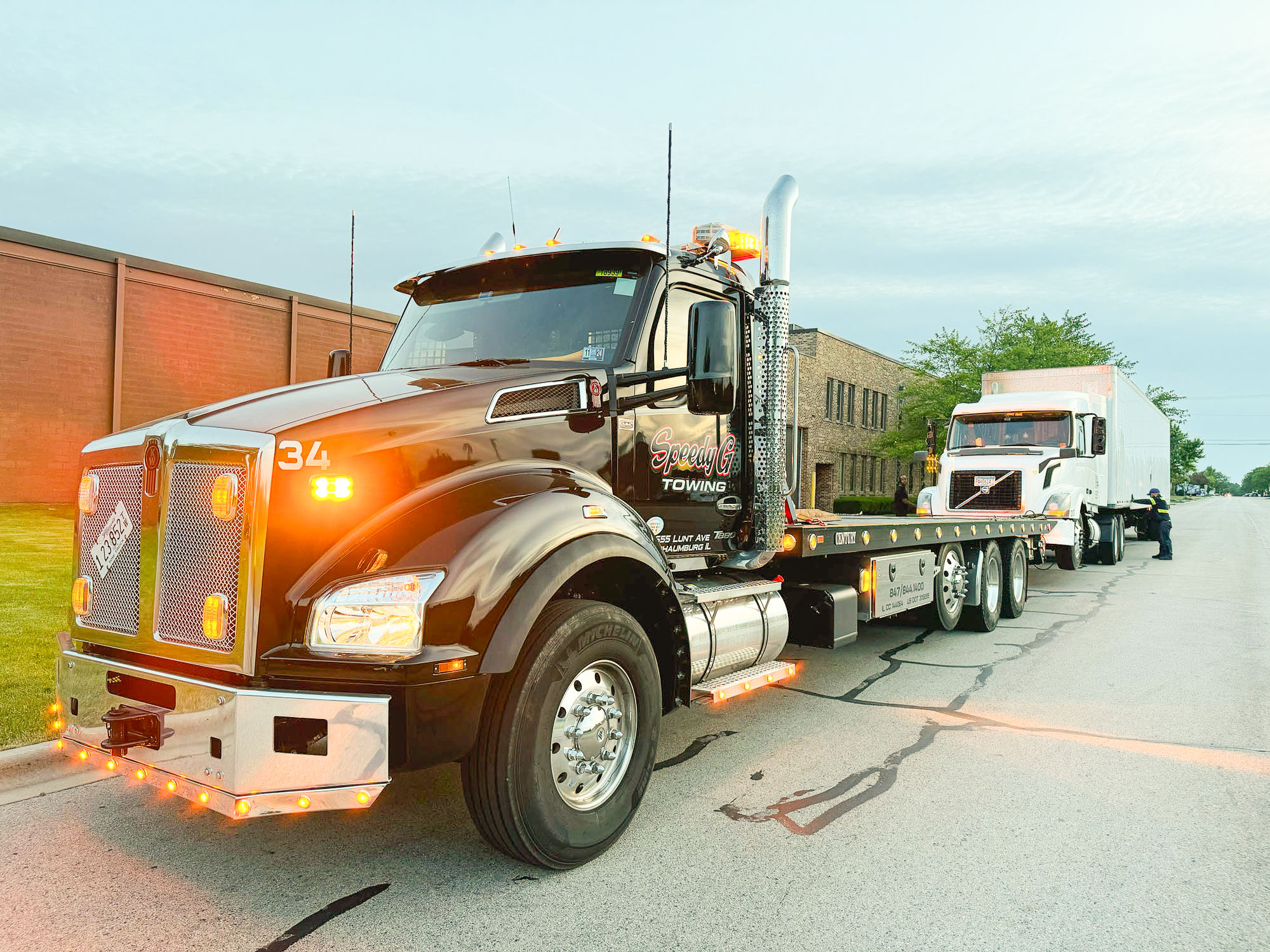
Speedy G Towing is a family-operated company serving Chicago and its suburbs with light, medium, and heavy-duty towing and roadside help. For more than 25 years, we’ve paired top-of-the-line equipment with honest, respectful service. Our crews handle jump starts, tire changes, lockouts, fuel delivery, and full recoveries for drivers and fleets.
A breakdown doesn’t have to wreck your schedule. Save our number, add it to your checklist, and call us the moment trouble starts. We’ll listen, plan the right response, and send a crew that treats your truck with care.
CALL NOW FOR 24/7 ROADSIDE HELP!
Frequently Asked Questions
How fast can a heavy-duty tow truck reach me?
For heavy-duty towing, arrival usually takes 25 to 45 minutes. Timing depends on your specific location, so share your exact mile marker when you call.
What can change the base price of a tow?
Base pricing includes a standard mileage rate. The total can change if your truck won’t roll, needs skates or dollies, or sits on a highway.
Do you offer free estimates before committing to a service?
Yes. Speedy G Towing provides free, no-obligation estimates. We’ll discuss your situation, lay out a clear plan and give you the facts before any work begins.
What should I have ready before the crew arrives?
The owner or a representative must be on scene with the keys. That person signs a pre-tow disclosure form before we touch or move the vehicle.
Can I finance a tow or roadside repair?
No. We don’t offer financing or flexible payment options. Standard insurance claims are the only exception, so keep your policy details handy when you call.
NEED A TOW IN CHICAGOLAND?
Stuck on the side of the road or need a heavy-duty recovery? Speedy G Towing is ready 24/7 across the Chicagoland area. Book online or give us a call and we will get you moving again.